Browsing Tag

Budget Travel

Budget Travel, Lifestyle Travel, Luxury Travel, Money Saving Tips, Travel Guides, Travel Hacks,

Budget Luxury Travel: 15 Smart Hacks for 5-Star Experiences

What if I told you that sipping champagne in a five-star hotel lobby, dining at Michelin-recommended restaurants, and booking spa treatments doesn’t require a trust fund?


Three years ago, I stood in the marble floored lobby of the Park Hyatt Paris-Vendôme, clutching my crumpled backpack and wearing my favorite (slightly worn) travel sneakers. The concierge smiled warmly as I checked into my luxurious suite one I’d snagged for just 15,000 points earned through strategic credit card spending on everyday groceries. That moment  sealed the  truth I’d discovered after years of travel: luxury and budget aren’t opposites. They’re dance partners waiting for someone clever enough to introduce them.

Welcome to the world of budget luxury travel, where five-star experiences meet shoestring budgets, and where knowing a few insider secrets transforms your vacation from ordinary to extraordinary without emptying your bank account.

The Budget Luxury Mindset: Redefining Value

Before get into specific travel hacks, let’s reframe what “luxury” actually means. True luxury isn’t about spending the most money it’s about maximizing experiences and comfort relative to cost. It’s the art of strategic splurging on what matters most while cutting costs ruthlessly on what doesn’t.

Budget conscious travelers who master this mindset consistently enjoy better vacations than wealthy tourists who throw money around without strategy. The secret? Knowing where to invest your limited resources for maximum impact.


Affordable Luxury Accommodations: Where to Rest Like Royalty

The Points and Miles Game Changer

Hotel loyalty programs are your golden ticket to budget luxury accommodations. Major chains like Marriott, Hilton, IHG, and Hyatt offer some of the most accessible paths to luxury stays.

Here’s how to make it work:

a group of credit cards sitting next to a cell phone

Sign up for hotel credit cards strategically. Many offer sign-up bonuses of 75,000-150,000 points after meeting minimum spending requirements. That’s often enough for 3-5 nights at premium properties. You can stay at the St. Regis Maldives, Conrad Tokyo, and Ritz-Carlton Bali all on points and get the experiences that would have cost $500-1,200 per night paid in cash.

Focus on off-peak redemptions. The same suite that costs 70,000 points during peak season might only require 40,000 points on a Tuesday in low season. You’re getting identical luxury for 43% fewer points.

Status matching shortcuts luxury. Many hotel chains offer status matches or challenges. Hilton Gold status (which comes free with certain credit cards) gets you complimentary breakfast at most properties, room upgrades, and late checkout. That’s $30-60 per day in breakfast savings alone, plus access to spaces and perks that make you feel like a VIP.

The Boutique Hotel Sweet Spot


white chair near white wall


Major chains aren’t your only option for cost-effective travel. Boutique hotels often provide luxury experiences at mid-range prices, especially when booked strategically.

Search on Tablet Hotels, Mr & Mrs Smith, and Design Hotels for curated collections of stylish properties. These platforms frequently offer exclusive rates and perks like complimentary breakfast or spa credits that add substantial value.

Book directly after comparing prices. While OTAs show initial pricing, calling hotels directly or using their websites often yields better rates plus perks. Mention that you’re choosing between their property and a competitor and you’d be surprised how often they’ll throw in complimentary breakfast or room upgrades to secure your booking.

The Vacation Rental Luxury Loophole

For groups or longer stays, luxury vacation rentals deliver five-star amenities at three-star prices. You can rent  four bedroom villa with infinity pool in Bali for $150/night (split four ways equals $37.50 per person).  Parisian apartment overlooking the Seine for $120/night, and a beachfront property in Mexico with private chef services for less than a standard hotel room would cost.

Platforms like Vrbo, Airbnb Luxe, and PlumGuide specialize in verified luxury properties. Look for low season deals and properties slightly outside tourist zones you’ll get authentic neighborhood experiences plus significant savings.

Dining Like Royalty Without the Royal Budget

Food can make or break both your budget and your luxury experience. Here’s how to feast magnificently without financial heartbreak.

The Michelin Lunch Strategy

Michelin-starred restaurants typically offer lunch menus at 40-60% less than dinner prices. This will be same chef, same kitchen, same standards, fraction of the cost. In Paris, we enjoyed a three-course lunch at a one-Michelin-star bistro for €35($40), while dinner would have cost €90($104). The midday natural light actually enhanced the plating presentation.

Many starred restaurants also offer bar seating or counter dining where you can order à la carte at lower price points while still experiencing the culinary artistry.

Market Tours and Cooking Classes

One of my favorite affordable luxury experiences combines education with incredible food. Cooking classes in destinations like Thailand, Italy, and Morocco typically cost $50-100 and include market tours, hands-on instruction, and multi-course meals featuring local specialties.

You’re not just eating you’re learning skills you’ll use forever while connecting with local culture. Compare that to a single dinner at a tourist trap restaurant, and the value proposition becomes obvious.

Happy Hour and Aperitivo Culture

European aperitivo culture is budget luxury at its finest. In Italy, order one drink at aperitivo  (typically 6-8pm) and you’ll have access to extensive buffets ranging from small bites to substantial spreads. You can turn  €8($9.30) Aperol Spritzes into full dinners in Milan, Turin, and Rome.

Similarly, upscale hotel bars often feature happy hours with half-price cocktails and complimentary appetizers. That rooftop bar with stunning views? Much more affordable at 5pm than 9pm, with identical vistas and atmosphere.

The Breakfast Maximization Method


When hotels include breakfast, make it count. Load up on protein, fruits, and substantial foods that keep you satisfied until late afternoon. I’m not suggesting taking food to-go (unless the hotel explicitly allows it), but a hearty 10am breakfast can easily eliminate lunch costs.

Many luxury hotels offer breakfast buffets worth $30-50 per person. Getting that included in your rate through hotel status, package deals, or credit card benefits provides exceptional value.

Luxury Activities and Experiences on a Budget

Free Luxury: Museum Days and Cultural Passes

Most major cities offer free museum entry one day per week or month. Paris museums are free the first Sunday of each month. London’s world-class museums are always free. NYC offers “pay what you wish” hours at several major institutions.

City passes bundle attractions at significant discounts. The Paris Museum Pass ($160 for six days) covers over 60 museums and monuments, plus skip the line access a luxury worth hundreds in time savings alone.

Low Season Activity Pricing

Popular activities often feature dynamic pricing. That $200 hot air balloon ride in Cappadocia? It drops to $120 in November. The luxury catamaran cruise in Santorini? Expect 40% discounts in May or October compared to peak July prices.

You’re getting identical (often superior) experiences with smaller crowds and better weather, plus the luxury of personalized attention from guides who aren’t rushing through back to back tours.

Spa Treatments at Luxury Hotels (Without Staying There)

topless woman lying on bed

Here’s an insider secret: Most luxury hotel spas accept outside guests. You don’t need to book a $600/night room to access their $120 massage. Many offer day passes that include spa access, fitness facilities, and pool areas.

In Southeast Asia particularly, luxury spa treatments cost a fraction of Western prices. I’ve enjoyed 90-minute massages at five-star resort spas in Thailand and Bali for $30-50 treatments that would cost $200 in the US.


Leverage Experience Booking Platforms

Platforms like Viator, GetYourGuide, and Klook often feature flash sales and promo codes for luxury experiences. Sign up for newsletters and follow them on social media for deals on everything from private yacht charters to helicopter tours.

I’ve snagged 30% discounts on private food tours, buy one get one deals on wine tastings at prestigious vineyards, and early-bird pricing on hot-air balloon rides and many experiences that felt extravagant but fit comfortably within my budget.


Transportation: Traveling in Style Without the Price Tag

Flight Upgrades Through Points and Bidding

Business class flights can be surprisingly affordable through points programs. I regularly fly business class to Europe for 60,000-70,000 points one-way  ticket that costs $3,000-5,000 in cash. The comfort, service, airport lounge access, and arrival experience justify focusing your points strategy here.

Can’t access award space? Plus-up and bidding programs let you bid points or cash for upgrades. You can  successfully bid $180 for a business class upgrade on a 10-hour flight about $18/hour for lie flat seats, premium meals, and priority service.

Luxury Ground Transportation Hacks

Skip expensive airport taxis by pre-booking private transfers through your hotel. They’re often comparable to taxi costs but provide the luxury of name-sign greetings and professional service.

For special occasions, Turo and similar platforms let you rent luxury vehicles at consumer-to-consumer prices rather than premium rental agency rates. That Mercedes convertible for your coastal drive? Often cheaper than you’d expect.

Train Travel First Class

In Europe and Asia, first-class train tickets often cost just 20-40% more than standard class while providing spacious seating, complimentary food and beverages, quieter carriages, and often lounge access. It’s an affordable luxury that transforms travel time into enjoyable experiences rather than mere transportation.


Timing Is Everything: When Budget Meets Luxury

The single most powerful budget luxury strategy is traveling during low or off-peak seasons. This one decision cascades benefits across every aspect of your trip:

  • Hotel rates drop 30-60%
  • Flights cost significantly less
  • Popular sites have manageable crowds (a luxury in itself)
  • Restaurants have availability without reservations
  • Service providers offer better rates and more attention
  • Weather is often ideal (avoiding extreme summer heat or winter cold)

I’ve traveled to Italy in November, Japan in February, Greece in May, and Portugal in October, all sublime experiences at prices that made luxury accessible.

The Credit Card Strategy for Budget Luxury Travel

This might be the most important section for maximizing affordable travel luxury. Strategic credit card use accelerates your access to premium experiences dramatically.

Focus on cards offering:

  • High sign-up bonuses (75,000+ points)
  • Bonus categories matching your spending (dining, groceries, gas)
  • Annual free night certificates (many hotel cards offer these)
  • Travel credits offsetting annual fees
  • Premium travel benefits (lounge access, travel insurance, hotel status)

 A typical strategy involves opening 2-3 travel cards per year, meeting minimum spending requirements organically through normal expenses, and converting those points into luxury experiences worth 5-10 times what you “paid” through annual fees.

The key is paying balances in full monthly. Interest charges instantly negate all benefits. Used responsibly, travel rewards programs are the ultimate budget luxury hack.

Packing Like a Luxury Traveler on Any Budget

Luxury isn’t just about where you stay—it’s how you feel throughout your journey. Investing in quality basics elevates every experience:

  • A great carry-on bag  eliminates checked luggage fees and stress ($200-300 one-time investment)
  • Merino wool clothing  looks polished, resists odors, and requires less packing (luxury is traveling light)
  • Noise-canceling headphones transform coach into first-class tranquility ($200-300)
  • A portable battery pack ensures you’re never scrambling for outlets like a budget backpacker
  • Quality toiletries in TSA-approved containers let you skip hotel miniatures and feel at home

These investments pay dividends across every trip, making budget travel feel infinitely more luxurious.

The Budget Luxury Traveler’s Final Wisdom

 After years of perfecting this approach, I’ve learned that true luxury isn’t about spending the most—it’s about experiencing the most per dollar spent.

The most profound travel moments rarely correlate with cost. That impromptu conversation with a Roman chef. The sunrise viewed from your points-booked overwater bungalow. The perfectly ripe peach from a French market. The sense of belonging you feel in a neighborhood far from tourist zones.

Budget luxury travel isn’t about deprivation or cutting corners—it’s about strategic choices that maximize joy, comfort, and memorable experiences while respecting financial reality. It’s entirely possible to feel like a million bucks without spending it.

Start with one strategy from this guide. Maybe it’s signing up for a hotel loyalty program, booking that Michelin lunch, or planning your next trip for shoulder season. Small changes compound into transformative travel experiences.

The world’s luxury isn’t reserved for the wealthy—it’s available to anyone willing to learn the system, plan strategically, and travel smart. Your next five-star experience is closer than you think, and it absolutely fits within your budget.

Now stop reading and start planning. That affordable luxury adventure is waiting.


What’s your favorite budget luxury travel hack? Share your experiences in the comments below—I’d love to hear how you’re unlocking premium experiences without premium prices!


Uncategorized,

Choosing Your Island Gateway: Miller Ferry vs. Jet Express for Your Put-in-Bay Trip

The shimmering waters of Lake Erie stretched out before me, a familiar invitation to adventure. After weeks of planning, saving, and daydreaming, the moment had finally arrived. What is the moment, you may ask? It’s my weekend getaway to Put-in-Bay. But even before stepping foot on this famous Ohio Island, there was a crucial decision to make: which ferry would be my gateway?

As an intentional traveler, every detail counts, especially the journey itself. You want the start of your adventure to be smooth, efficient, and aligned with your overall travel style. For Put-in-Bay, that choice boils down to two main contenders: the reliable Miller Ferry and the speedy Jet Express.

Having navigated these waters myself, I’m here to break down the pros and cons of each, helping you pick the perfect ferry to kick off your unforgettable island escape.

Miller Ferry: The Practical Islander’s Choice (My Experience)

Miller Ferry loading cars at Catawba dock for Put-in-Bay

When I researched my trip to Put-in-Bay, the Miller Ferry immediately stood out for its straightforward, no-frills approach. My goal was a relaxed, budget conscious escape where every dollar counted, and the Miller Ferry promised just that.

The Experience: Stepping onto the Miller Ferry from the Catawba dock felt like boarding a d budget!

  • Frequent Departures: During peak season, ferries run every half an hour, making it easy to hop on.
  • Family-Friendly: The more relaxed pace and ability to bring vehicles make it a popular choice for families with lots of gear.

Cons to Consider:

  • Island Dock Location: The Miller Ferry docks at Lime Kiln Dock, the south end of Put-in-Bay, which is like 2 miles. This means you might need additional transportation, such as a golf cart, taxi, or a long walk, to reach the downtown area where all the action and attractions are.


  • Limited Late Service: If you plan on enjoying the island’s nightlife, be mindful of their earlier last departure times. You might need to arrange alternative travel back to the mainland if you stay out late.

Best For:

Budget-conscious travelers, families with kids and gear, those bringing their island transportation, such as cars, golf carts, bicycles, etc., and anyone prioritizing affordability and ease of mainland parking.large, efficient workhorse. There was a mix of families, groups, tourists, and islanders. The ride itself is incredibly short, just about 18 minutes across the water. It’s a smooth, open-air journey, though there are enclosed cabins available as well that offer lovely views of the lake. What struck me most was the ease of loading and unloading, especially for vehicles.

Pros for the Intentional Traveler:

  • Unbeatable Affordability: With adult passenger fares typically around $9 one-way for adults and $1.50 for children age 6-11 and free for under 6 years old. You can always check their website for fare updates. To me, these prices are the most budget-friendly option.
  • Vehicle Transport: This is Miller’s biggest differentiator: when you need to bring your car, golf cart, or bike to the island (though I’ll share why you probably don’t in my next post!). Miller is your only choice. Be aware that there are additional fees of $23 for a car one-way, $2.50 for a bicycle, and $16 for a motorcycle. Also, expect potential wait times for vehicles, especially on peak days.
  • Free Parking: Leaving your car at the Miller Ferry dock in Catawba is free, which is a huge bonus if you’re driving from Columbus, like I did. No hidden fees ruining your budget.
  • Frequent Departures: During peak season, ferries run every half an hour, making it easy to hop on.
  • Family-Friendly: The more relaxed pace and ability to bring vehicles make it a popular choice for families with lots of gear.

Cons to Consider:

  • Island Dock Location: The Miller Ferry docks at  Lime Klin Dock ,the south end of Put-in-Bay, which is like 2 miles.This means you might  need additional transportation such as golf cart, taxi, or a long walk to reach the downtown area where all the  action and attaractions  are.
  • Limited Late Service: If you plan on enjoying the island’s nightlife, be mindful of their earlier last departure times. You might need to arrange alternative travel back to the mainland if you stay out late.

Best For: Budget conscious travelers, families with kids and gear, those bringing their island transportation, such as cars, golf carts, bicycles, etc, and anyone prioritizing affordability and ease of mainland parking.


Jet Express: The Speedy Downtown Review

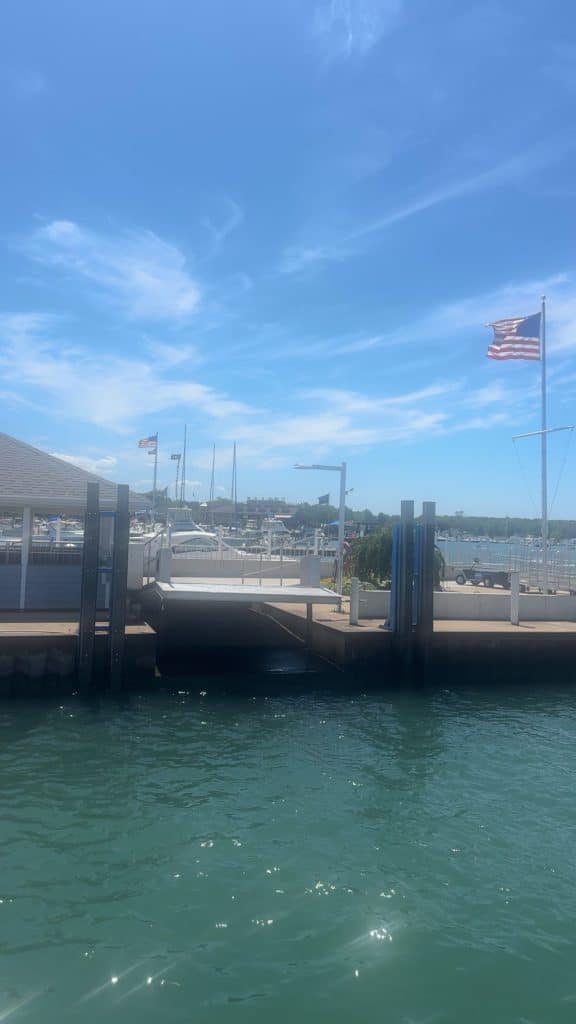
Jet Express Dock Sandusky

For those who prioritize speed and direct access, the Jet Express is the clear choice. My initial research showed it to be a favorite for day-trippers and those heading straight into the action.

The Experience:

The Jet Express is a high-speed catamaran. My ride was exhilarating. Can feel the power as it glides across the water. There are enclosed cabins with panoramic windows and air conditioning. I loved standing on the open-air upper deck, feeling the breeze and snapping photos of the other Lake Erie islands passing by. This is where a good waterproof phone pouch comes in handy to protect your device from splashes or accidental drops while capturing those perfect lake views. It truly delivers on its promise of a quick, efficient journey.


Pros for the Intentional Traveler

  • Downtown Convenience: This is the major advantage. The Jet Express docks right in the heart of downtown Put-in-Bay and Sandusky. You step off the ferry and are immediately in the shops, restaurants, and attractions. No need to worry about extra transport on the island.
  • Speed: Traveling at over 40 mph, the trip from Port Clinton takes roughly 25-30 minutes, and about 45 minutes from Sandusky. It’s the fastest way to get to the island.
  • Late-Night Service: If you’re planning to enjoy Put-in-Bay’s famous nightlife or just a leisurely dinner, the Jet Express offers later departures, allowing you to maximize your evening on the island.
  • Multiple Departure Points: You can catch the Jet Express from both Port Clinton, Kelly’s Island, and Sandusky, offering flexibility depending on where you’re driving from.
  • Onboard Amenities: Some Jet Express ferries offer onboard restrooms and even a small bar, adding to the comfort of the ride. I always recommend a compact travel pillow and noise-canceling earbuds for any journey, big or small, to maximize relaxation.


Cons to Consider:

  • Higher Cost: Adult round-trip tickets are typically around $27-$28 one-way from Port Clinton/Sandusky. respectively you can check their official site for latest rates.. It’s a noticeable jump from the Miller Ferry.
  • No Vehicles: You cannot bring cars or golf carts on the Jet Express. It’s strictly for passengers and bikes. Bikes have an additional fee of $5.75 each way.
  • Paid Mainland Parking: Expect to pay for parking at the Jet Express docks on the mainland, which costs about $18 per day.

Best For:

Day trippers, those staying downtown, travelers prioritizing speed and convenience, and those looking to enjoy the island’s nightlife without worrying about an early ferry back.


The Verdict: Which Put-in-Bay Ferry is Right for YOU?

Ultimately, the best ferry for your Put-in-Bay trip depends on your priorities:

Feature Miller Ferry Jet Express
Cost Lower (from $9 one-way adult) Higher (from $27 one-way adult)
Travel Time ~18 mins (Port Clinton) ~25-45 mins (Port Clinton/Sandusky)
Island Dock South End (Lime Kiln) Downtown
Vehicles Allowed Yes (cars, golf carts, bikes) No (passengers & bikes only)
Mainland Parking Free at Catawba Paid at Port Clinton/Sandusky approx. $18/day
Late Night Service Limited Available


My Personal Choice:

For my intentional Put-in-Bay trip, balancing budget with the desire for direct access, I chose the Miller Ferry. While the Miller Ferry meant for my budget for being cheap and offer free parking, I  knew,  there is no worry about where im going to park my car and how much it cost,  also there is many things to do in Catawaba compare to Sandusky , more affordable hotels  . Miller Ferry  allowed me to kick off my adventure exactly as I’d envisioned.

Consider this:

.

  • If you’re driving from Columbus and want to save every penny, the Miller Ferry from Catawba with its free parking is a strong contender.
  • If you’re doing a quick day trip and want to maximize time downtown, the Jet Express is your fast pass to the heart of the action.
  • No matter which ferry you choose, remember to pack light but smart! A versatile travel backpack is always my go-to for these types of getaways, ensuring I have space for my reusable water bottle and a portable phone charger.

No matter which you choose, the anticipation of reaching Put-in-Bay is a unique part of the journey. Both ferries deliver you to an incredible island experience.

Your Turn!

Which Put-in-Bay ferry sounds like your ideal island gateway? Have you taken either before? Share your thoughts and experiences in the comments below!

And now that you know how to get there, stay tuned for my next post where I  will dig deep into the best ways to get around once you’re on the island! What’s your go-to Put-in-Bay ferry?